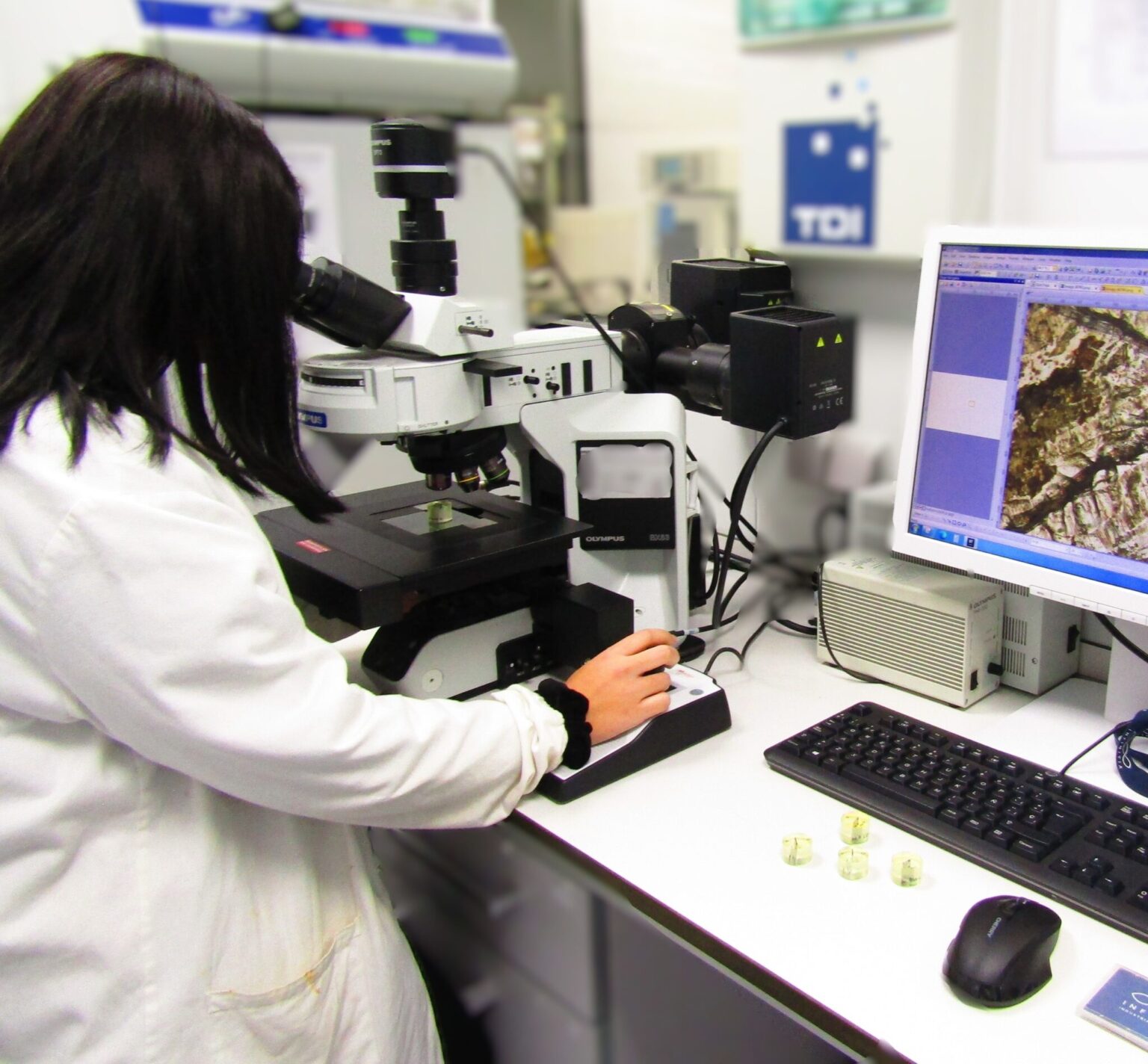
Non-destructive testing END, NDT
Non-destructive testing is a service provided by INFINITIA to evaluate the integrity, quality and reliability of materials and components without compromising their functionality, being key in industrial environments where safety and operational continuity are critical.
At INFINITIA, this service is approached from a technical and problem-solving perspective, combining knowledge of materials, industrial processes and in-service behavior. Our team of specialists and the available equipment allow each inspection to be adapted to the specific characteristics of the component, the expected type of defect and the operating conditions.
The objective is to identify discontinuities, detect defects in materials, validate manufacturing processes and analyze the real condition of assets, both in development phases and in operation. This allows failures to be anticipated, maintenance strategies to be optimized and risks associated with unplanned downtime or performance losses to be reduced.
What is non-destructive testing (NDT) and how these methods and techniques work?
Non-destructive testing (END or NDT – Non-Destructive Testing) comprises a set of inspection techniques designed to evaluate the properties, integrity and behavior of materials, components or structures without compromising their functionality. Unlike destructive testing, these methods allow defects or anomalies to be analyzed without the need to alter or destroy the part, which is critical in industrial environments where components are in use or have high value.
In the industrial context, non-destructive testing services are used to detect internal and surface discontinuities such as cracks, porosity, inclusions, lack of fusion in welds or defects derived from manufacturing processes, using techniques such as visual inspection and X-rays. These techniques include methods such as ultrasonic testing, radiography, liquid penetrant testing, magnetic particle inspection or thermography, among others, each adapted to different materials and types of defects.
Industrial non-destructive inspection is not limited to defect detection, but also allows evaluation of damage evolution in service, being a key tool in predictive maintenance and quality control. Its application ranges from validation of production processes to inspection of assets in operation.
In environments where safety, reliability and operational continuity are critical, industrial NDT testing and eddy current testing become an indispensable solution to ensure compliance with technical and regulatory requirements without interrupting operation or generating costs associated with the destruction of components.
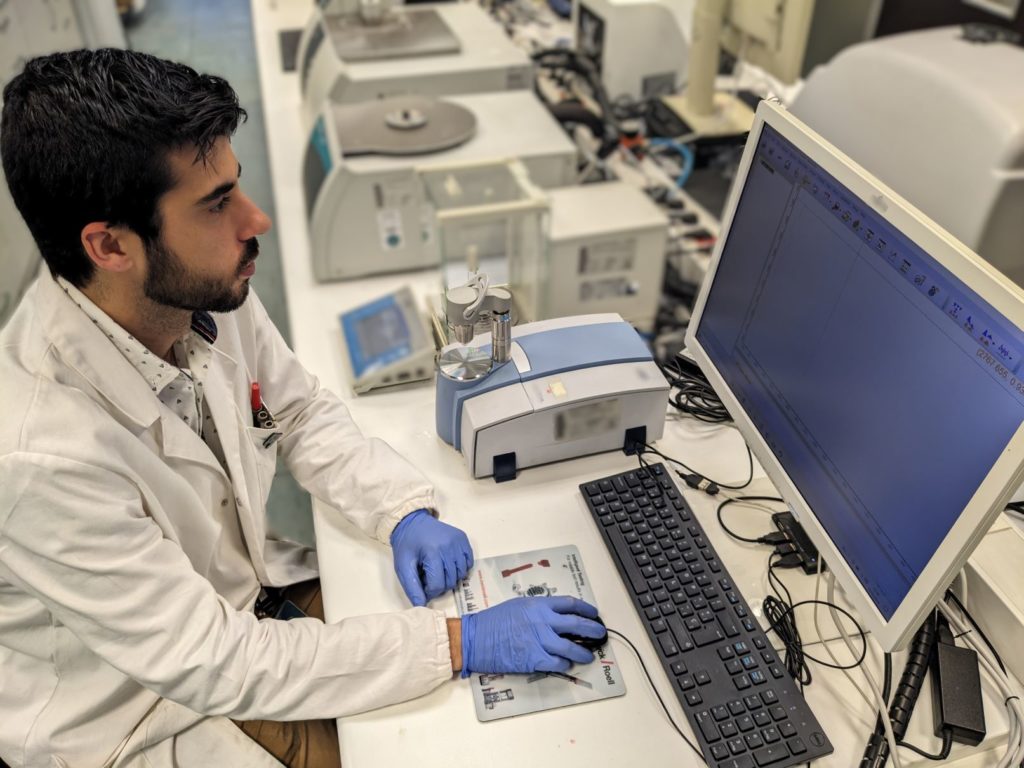
Benefits of non-destructive testing END, NDT in industrial applications
Non-destructive testing provides key advantages in the technical management of industrial materials and components, as it allows relevant information to be obtained without altering their condition or interrupting their use.
One of the main benefits is the early detection of defects, both internal and surface, allowing failures to be anticipated before they evolve into critical situations. This directly translates into improved safety and reliability of assets.
In addition, these tests allow maintenance processes to be optimized through condition-based strategies, reducing unplanned downtime and avoiding unnecessary replacements, which is a significant benefit of regular NDT. This contributes to a significant reduction in operating costs and greater availability of equipment through the implementation of advanced NDT inspection methods.
From a quality perspective, non-destructive inspection methods facilitate the validation of manufacturing processes, enabling deviations to be detected and improving the consistency of the final product.
Finally, non-destructive testing services allow risks to be reduced during validation and certification phases, ensuring that components meet required standards before being put into service or commercialized, using methods such as industrial radiography with gamma sources.
Non-destructive testing at INFINITIA
At INFINITIA, non-destructive testing is integrated within a global approach to materials analysis and forensic engineering, aimed at understanding the real condition of components and facilitating well-founded technical decision-making. These services are not limited to the application of inspection techniques, but are conceived as a tool to solve specific industrial problems.
The INFINITIA technical team defines the most appropriate inspection strategy based on the material, geometry, expected defect type and service conditions, ensuring that the analysis is adapted to each case and to the objectives of the project.
Furthermore, the results obtained are not interpreted in isolation, but are integrated with other complementary analyses, such as materials characterization or failure analysis, allowing detected defects to be correlated with their origin and their possible evolution in service.
This approach allows INFINITIA not only to inspect, but also to provide value in terms of diagnosis, process validation and continuous improvement, contributing to increasing the reliability, safety and performance of industrial systems.
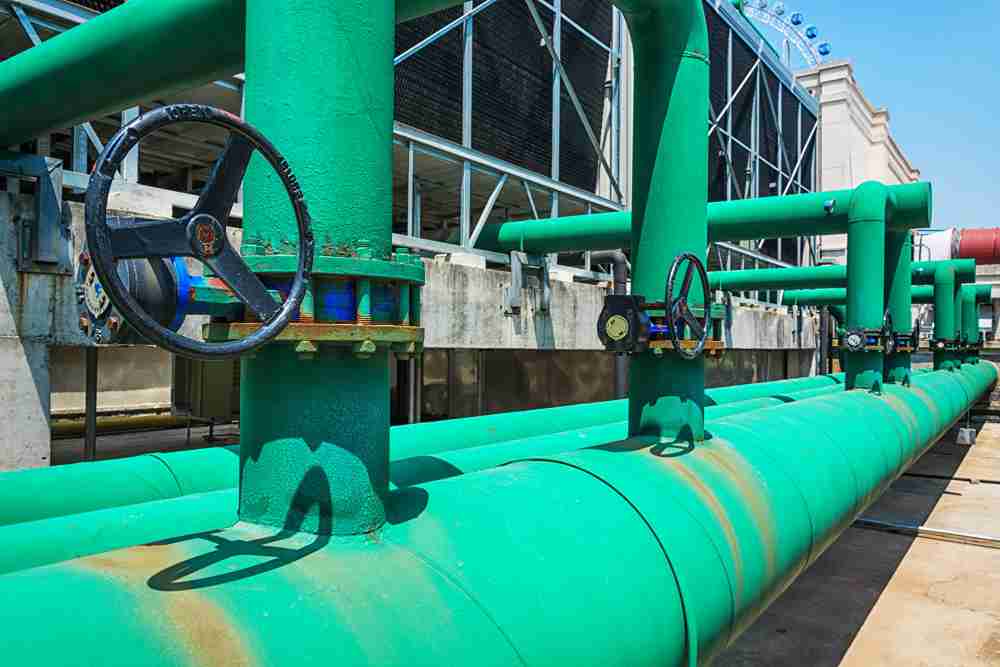
Types of NDT and non-destructive testing methods for industrial applications
At INFINITIA, we apply different types of non-destructive testing to evaluate the integrity, quality and behavior of materials and components without compromising their functionality. These methods allow defects to be detected, processes to be validated, and the real condition of assets in service to be analyzed using non-destructive evaluation techniques.
Our objective is to select the most appropriate technique based on the type of material, geometry, service conditions and expected defect, combining different methodologies to obtain a complete, reliable and decision-oriented evaluation.
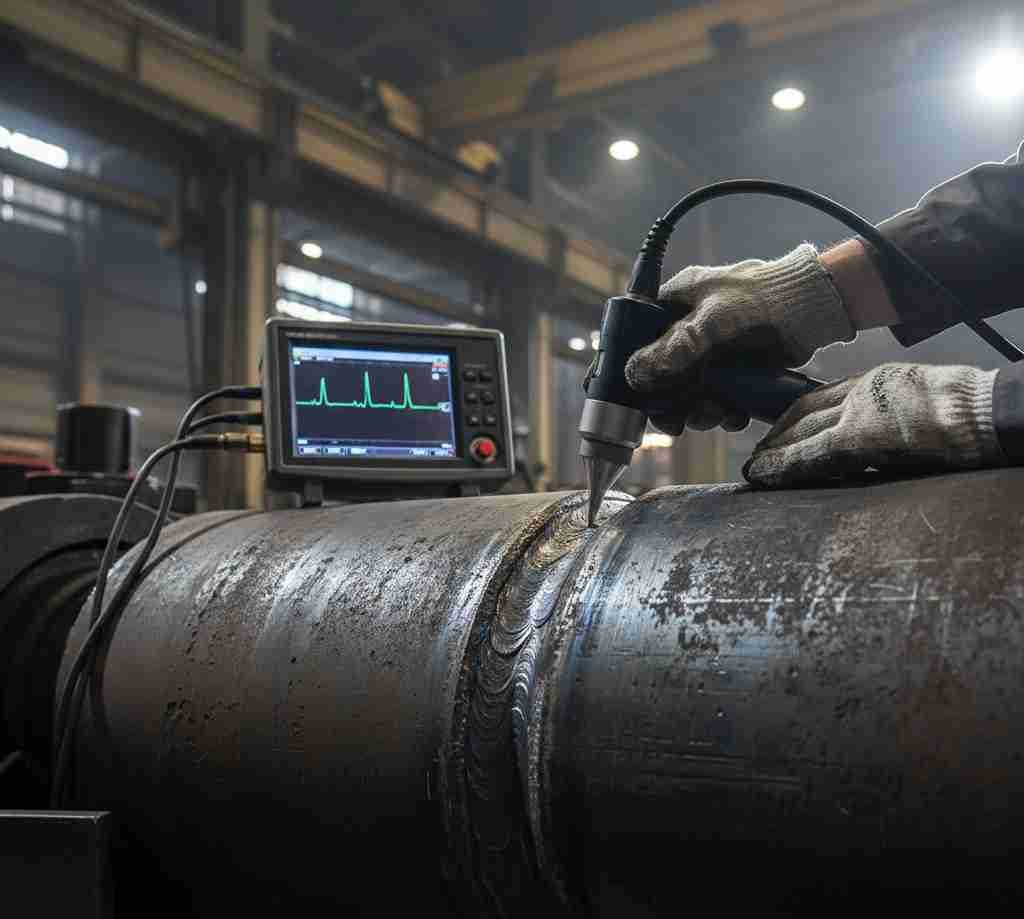
Ultrasonic inspection: a common NDT method for internal defect detection
This technique is based on the propagation of high-frequency acoustic waves through the material, analyzing the reflections generated by internal discontinuities, a process known as acoustic emission testing. It allows the detection of defects such as cracks, surface discontinuities, inclusions, lack of fusion in welds or thickness loss due to corrosion.
In addition to detection, ultrasonic testing allows the depth and location of the defect to be characterized, being especially useful in highly critical components. At INFINITIA, we use this technique both in quality control and maintenance, especially in metallic structures, welds and equipment subjected to pressure.
Industrial radiography: advanced NDT techniques for internal inspection
Industrial radiography uses ionizing radiation to obtain an internal image of the component, allowing volumetric defects such as porosity, cavities, inclusions or manufacturing defects in welds and cast parts to be identified.
Its main advantage is the ability to generate direct visual evidence of the defect, which facilitates interpretation and traceability. At INFINITIA, we apply radiography testing to critical components such as pipelines, complex welds, or pressure vessels, especially when documentation validation or regulatory compliance is required.
Liquid penetrant testing method for surface defect detection
Liquid penetrant testing, a widely used nondestructive testing method, allows surface-breaking defects to be detected by applying a high-capillarity liquid to the surface of the material, which infiltrates discontinuities such as cracks or pores. Subsequently, through the development process, the retained liquid emerges and makes these defects visible.
It is a simple but highly sensitive technique, applicable to non-porous materials and especially useful in inspections after machining or welding processes. At INFINITIA, it is used as a fast and effective control method to identify surface defects that may act as the origin of failure in service, utilizing various NDT methods.
Magnetic particle NDT technique for crack detection in ferromagnetic materials
This method is based on magnetizing the material to generate a magnetic field; the presence of discontinuities produces flux leakage that attracts ferromagnetic particles, making the defect visible using electromagnetic testing.
It allows the detection of surface and subsurface cracks with high sensitivity in ferromagnetic materials. At INFINITIA, guided wave testing is commonly used in components subjected to fatigue, such as shafts, gears or structural elements, where early crack detection is critical.
Eddy current testing process for conductive materials inspection
Eddy current testing is based on the principle of electromagnetic induction, generating currents in the material whose variation allows discontinuities to be detected, surfaces of materials to be analyzed, thickness changes to be identified or corrosion processes to be evaluated.
This technique is especially useful in conductive materials and allows fast, non-contact inspections, even in complex geometries. At INFINITIA, it is applied in the inspection of pipelines, heat exchangers, or aerospace components, utilizing techniques like radiographic testing and being especially effective for detecting surface or subsurface defects.
Infrared thermography as a non-destructive testing technique for thermal anomalies
Infrared thermography allows the analysis of the temperature distribution of a component by capturing infrared radiation, identifying thermal anomalies associated with defects or failures in operation.
It is a non-invasive technique that can be applied to equipment in operation, being especially useful for detecting overheating, energy losses or defects in electrical and mechanical systems, including NDT methods. NDT methods allow the analysis of materials or components, enabling the implementation of different predictive maintenance strategies to anticipate failures and optimize the operation of assets.
X-ray fluorescence analysis (XRF)
X-ray fluorescence (XRF) allows the elemental composition of a material to be determined without the need for complex sample preparation. By excitation with X-rays, a characteristic spectrum is obtained that identifies the elements present and examines the composition of materials.
At INFINITIA, we use XRF for alloy identification, composition control and detection of contaminants, being especially useful in rapid inspections in the field or laboratory.
LIBS spectroscopy (Laser-Induced Breakdown Spectroscopy)
LIBS spectroscopy allows elemental composition to be determined by generating a laser-induced microplasma whose emission is analyzed to identify the elements present.
It is a fast and versatile technique, applicable to a wide variety of materials, and often incorporates various NDT techniques. Although it involves localized micro-ablation, its impact is minimal, so it is considered quasi non-destructive. At INFINITIA, it is used for material identification and field analysis, ensuring compliance with the highest standards of nondestructive testing.
Raman spectroscopy
Raman spectroscopy allows the molecular structure of a material to be analyzed through the interaction of light with its chemical bonds, complementing NDT methods used by technicians. It is especially useful in the study of polymers, coatings, chemical products or degradation processes.
At INFINITIA, we apply Raman to identify materials, detect structural changes and analyze aging or contamination processes, providing key information in failure analysis.
Infrared spectroscopy (FTIR)
Infrared spectroscopy (FTIR), a technique widely used in the characterization of organic materials, is one of the infrared testing methods that can be employed in various NDT applications.
At INFINITIA, we use FTIR for the analysis of polymers, coatings and residues, allowing chemical degradation, material compatibility or the presence of unwanted substances to be evaluated.
Use of NDT testing methods across industrial sectors
Non-destructive testing is applied in multiple industrial sectors where reliability and safety are critical factors, including leak testing and magnetic particle testing. Its use allows control and maintenance strategies to be adapted to the specific needs of each industry, particularly through the application of NDT technologies.
Industrial non-destructive inspection is integrated both in manufacturing stages and in operation, allowing quality to be ensured and in-service degradation to be detected through the use of non-destructive testing methods.
Energy industry: Integrity assessment under extreme conditions
In the energy sector, components are subjected to extreme conditions of temperature, pressure, and load, which accelerates degradation mechanisms such as fatigue, creep, or corrosion, necessitating effective NDT processes. The presence of defects, even of small size, can lead to critical failures with high economic, environmental and safety impact, especially in continuously operating facilities with high safety standards.
- Need for in-service inspection: Assets must be evaluated without stopping operation, which requires industrial non-destructive inspection techniques applicable in continuous operation, using non-destructive testing methods to ensure component safety.
- High-responsibility components: Equipment such as pipelines, boilers or turbines requires strict control due to the consequences of failure, making material inspection necessary.
- Severe operating conditions: High temperatures, pressure and aggressive environments accelerate defect initiation and propagation, requiring non-destructive testing to ensure safety.
Industrial NDT testing allows pipelines, heat exchangers, welds and critical structures to be evaluated without interrupting operation, facilitating condition-based maintenance strategies.
Aerospace industry: Defect control in components, materials inspection and structures
The aerospace industry requires extremely high levels of quality, reliability, traceability, and rigorous non-destructive examination protocols. Defects, even of micrometric size, can compromise structural integrity and system safety, requiring exhaustive control at all stages through destructive and non-destructive testing.
- High regulatory requirements: Aerospace certification requires the application of advanced non-destructive testing techniques under strict standards, including laser testing and other NDT methods.
- Advanced materials: Use of lightweight alloys and composite materials requiring specific inspection techniques.
- Exhaustive quality control: Each component must be individually validated before integration into the final system.
Non-destructive testing services allow structural components to be validated, internal defects to be detected and conformity to be ensured before assembly or commissioning.
Metallurgical industry: Materials characterization and defect control in manufacturing
In processes such as casting, forging, or welding, internal or surface defects commonly appear that affect mechanical performance and service life, highlighting the importance of visual testing. Many of these defects are not externally visible but can act as failure initiation points under load or in service, emphasizing the need for various NDT methods.
- Process defectology: Presence of porosity, inclusions, segregations or lack of fusion derived from non-optimal manufacturing conditions that can be verified by X-rays.
- Production variability: Deviations in parameters such as temperature, speed or composition that generate recurring defects or quality variability.
- Quality validation: Need to ensure material integrity before machining, assembly or commissioning.
Inspection allows defects to be detected from early stages, reducing rejects and improving the robustness and repeatability of the production process.
Railway industry: Reliability assessment in components subjected to fatigue and corrosion
The railway sector is strongly conditioned by the safety and durability of components subjected to cyclic loads and variable operating conditions, where visual inspection is essential. Fatigue damage accumulation can lead to progressive failures if not detected in time.
- Structural fatigue: Initiation and propagation of cracks due to repeated loading cycles and vibration during operation.
- Safety-critical elements: Components such as axles, wheels, rails or welds require continuous monitoring due to their direct impact on safety.
- Planned maintenance testing also includes regular NDT to ensure equipment reliability. Periodic inspections to anticipate failures and adjust intervention intervals using methods based on electromagnetic induction, such as eddy current testing.
These techniques allow early crack detection, monitoring of their evolution and ensuring the structural integrity of railway systems through material inspection
Electronics industry: Inspection of defects in components, assemblies and solder joints
In electronics, internal defects or failures in joints can directly affect the operation, stability and service life of the device. High integration density makes detection using conventional methods difficult.
- Miniaturization: Small components where minor discontinuities can have a significant impact.
- Critical joints: Solder joints, wire bonding or encapsulations sensitive to internal defects or poor adhesion.
- Functional reliability: Need to ensure correct operation under demanding thermal and electrical conditions.
Inspection allows hidden defects in assemblies to be identified, manufacturing processes to be validated and product quality and reliability to be improved.
Industrial maintenance: Inspection services for diagnostics in operating equipment, storage tanks or leak risk reduction
In industrial environments, much of the value of these techniques lies in the evaluation of equipment in operation, where access is limited and shutdown is not always feasible. Early detection of anomalies is key to avoiding unexpected failures and can also lead to improvements in manufacturing processes.
- Predictive maintenance: Identification of incipient defects before they evolve into critical failures.
- Cost reduction: Avoiding unnecessary replacements and optimizing interventions based on actual condition using eddy current testing.
- Asset availability: Minimizing downtime and improving operational continuity.
These solutions allow non-destructive testing to be carried out, the real condition of equipment to be diagnosed, interventions to be prioritized and decisions to be made based on objective data.
The role of non-destructive testing in INFINITIA’s forensic engineering
Non-destructive testing is a strategic tool for any company that needs to ensure the integrity, reliability and safety of its materials and components without compromising their functionality. Throughout this content, it has been shown how INFINITIA applies different inspection techniques to detect and evaluate failures, validate processes and assess the real condition of assets, ensuring their correct performance in service.
Thanks to analysis techniques including ultrasonic testing, industrial radiography, eddy current testing, liquid penetrants, magnetic particles or thermography, we help companies anticipate failures, optimize lifecycle and maintenance, and reduce costs associated with downtime or claims. NDT testing is key in industry to evaluate potential failures and risks. From sectors such as energy, oil & gas or metallurgy, to aerospace, automotive or electronics, these tests are a key pillar in product validation and in the efficient management of industrial assets.
The future of this field is moving toward greater integration of NDT methods, advanced monitoring technologies, digitalization of inspection and predictive analysis. The combination of non-destructive techniques with materials characterization tools and data analysis will enable a deeper understanding of in-service behavior and more accurate decision-making. At INFINITIA, we are working along these lines, incorporating technological innovation while maintaining the technical rigor required by industry.
Having INFINITIA as a technological partner means having access to an expert team in forensic engineering, inspection and materials characterization, capable of designing testing strategies tailored to each need. Our objective is to provide confidence, safety and competitiveness, ensuring that components not only meet initial requirements but maintain their integrity throughout their entire service life.